title: "Beyond the Framework: Why Cultural Intelligence in Poland Needs a Current, Local Lens" tags: [poland, market-entry, cultural-intelligence, canada]
A Quebec supplier of wild blueberries once pushed back when I asked for a radioactivity report — a routine requirement for food entering the EU market. His reasoning: Canada doesn't ask for this, and Poland is "close to Chernobyl," so he assumed the request was some kind of local paranoia. In fact it was neither Polish nor personal — it's EU law. All food entering the European Union has to meet strict legal limits for radioactivity, currently around 600 Bq/kg, regardless of origin or destination country. It's a routine compliance step, not a symptom of anything.
What struck me wasn't the pushback itself — that's a normal part of trade — it was where his assumption came from. An image of Poland formed decades ago, somewhere between Cold War headlines and a 1986 nuclear accident, was still doing the thinking for him in a 21st-century transaction. He wasn't wrong to be cautious. He was working from a mental model that hadn't been updated in a very long time.
That's the same trap that shows up, in a more academic form, whenever companies rely on standard cultural frameworks to prepare for a market like Poland.
Anyone preparing to do business in a new country eventually runs into the same set of tools: Hofstede's Cultural Dimensions, the GLOBE study, Erin Meyer's Culture Map. They're useful. They give you vocabulary — power distance, uncertainty avoidance, directness versus indirectness — and a shared language for a conversation that would otherwise be pure guesswork.
They're also, by design, snapshots. And that matters more in Poland than in most places.
A generation happened between the data and today
Hofstede's foundational work dates to the 1960s–80s, built on a single multinational's workforce. Poland's numbers, like those of most former Eastern Bloc countries, were only added later — after 1989, after the market transition, after EU accession in 2004. Whatever year those numbers were collected, one thing is certain: the Poland being measured is not the Poland a Canadian or Gulf company is entering in 2026.
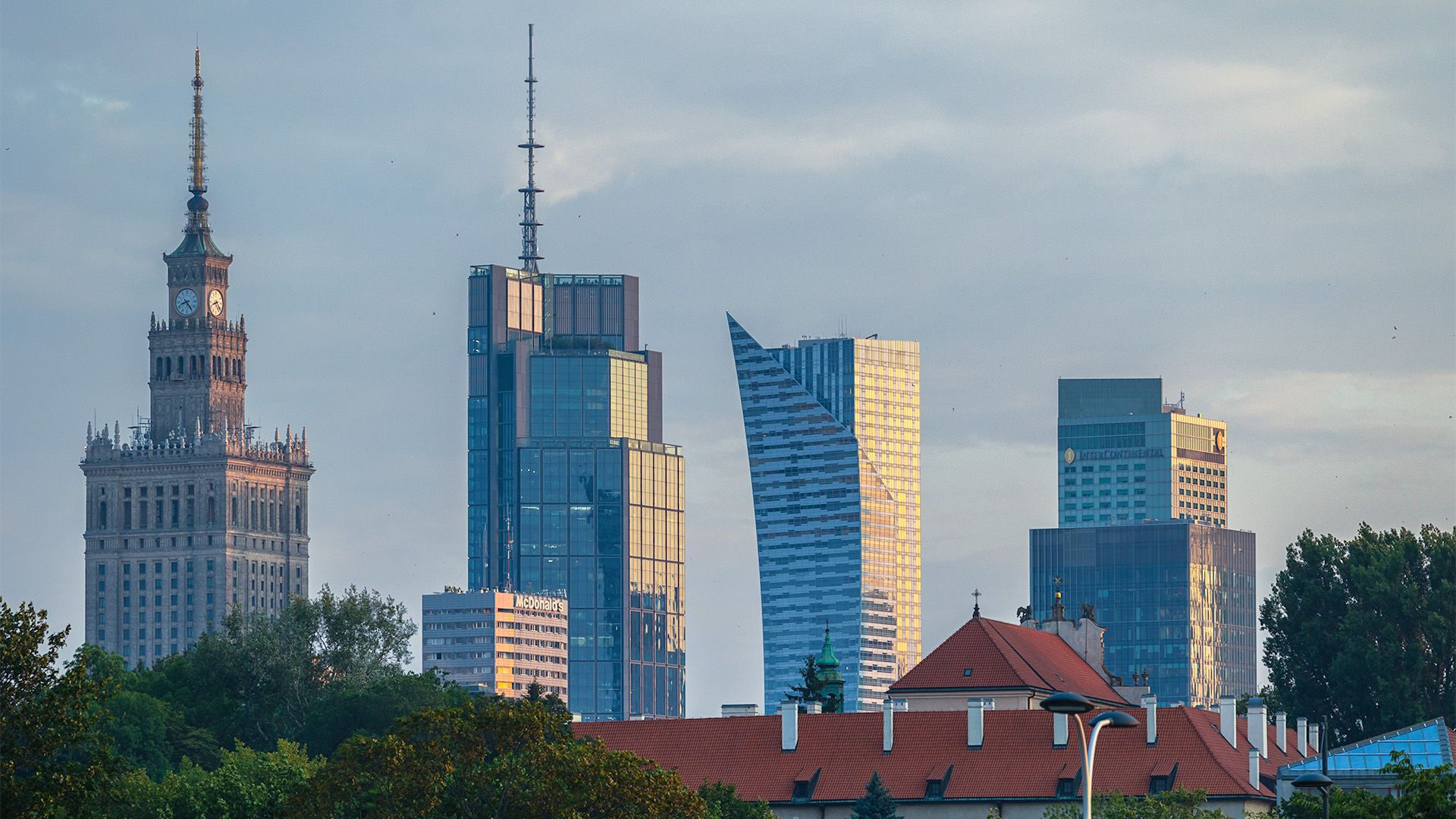
Warsaw, Kraków, Wrocław, Gdańsk — these cities have gone through several distinct business cultures in the span of one working career. A manager who started their career under a different economic system may now report to someone born after EU accession who has only ever worked for Western multinationals. The frameworks weren't built to track that kind of internal generational shift, and they don't update themselves to reflect it.
This isn't a flaw in the models — it's a limit of any model
No cultural framework, however well constructed, can stay current on its own. That's not a criticism of Hofstede, GLOBE, or Meyer — it's simply what happens when you try to compress a moving, living market into a fixed set of scores. The frameworks tell you what questions to ask. They don't tell you the current answer.
That gap is exactly where a foreign company entering Poland tends to get exposed — not because they used the wrong framework, but because they applied it as if it were still describing today's market, today's negotiating counterpart, today's expectations around hierarchy, contracts, and pace.
Canada has been through its own version of this
It's worth pointing out that this isn't a uniquely Polish problem. Canada has undergone its own significant population transformation over roughly the same 25-year window — immigration shifting heavily toward South Asia, the Philippines, and increasingly Latin America and Africa, reshaping workplaces, consumer markets, and business norms across the country. Any static cultural profile of "Canada" from the 1990s would miss most of what a company operating there today actually needs to know.
That parallel matters. Someone who has lived through both transformations firsthand — not studied them from a distance, but worked inside them — carries something a framework can't provide: a working understanding of how fast-changing, immigration-and-transition-driven markets actually behave, and what tends to go wrong when foreign companies assume the country they're entering has stood still.
What actually closes the gap
The answer isn't a better framework. It's someone who is physically present, working across sectors and cities right now, who can tell you not just what the textbook says about Polish business culture, but what's actually true in the room you're about to walk into — this quarter, in this city, with this generation of counterpart.
That's the piece that doesn't show up in any survey data: current, on-the-ground read of a market that keeps moving. Frameworks are a starting point. A partner who has actually lived through this kind of change — on both sides of the Atlantic — is what tells you whether a request is a legal requirement or a leftover assumption, and keeps a market entry from running on either.
If you're preparing to enter the Polish market and want a current read rather than a textbook one, that's exactly the conversation worth having before you land.